



Today's Mishnah Yomi
Kilayim 5:4 - 5:5
The Mishnah Yomi for Saturday, January 8, 2028 is Kilayim 5:4 - 5:5
Mishnah 1
Mishnayos Kilayim Perek 5 Mishnah 4
כלאים פרק ה׳ משנה ד׳
Mishnah 2
Mishnayos Kilayim Perek 5 Mishnah 5
כלאים פרק ה׳ משנה ה׳
Bartenura
הנוטע ירק בכרם או מקיים – that he sees it (i.e., mixed seeds) that it is growing and leaves it alone.
הרי זה מקדש וכו' – the principle of our Mishnah is that always [a person] sanctifies sixteen cubits in every direction in a circle. But even though it is taught in the Mishnah above (Tractate Kilayim, Chapter 4, Mishnah 5) that a person sows four cubits of tilling the vineyard, he only sanctifies two rows, where he sows between the vines, he sanctifies sixteen [cubits] according to the measure of a large vineyard that combines until sixteen [cubits]. But which vineyard that will be thirty-two cubits square by thirty-two cubits and the vegetation is planted in the middle point when it is encircled by a circle, it will surrounded by sides of a square and it will be a diagonal line of thirty-two cubits, the circle will be sanctified entirely which is sixteen cubits in every direction from the vegetation. And here if the vines are planted.
על ארבע ארבע (vines separated from one another by [intervals of] four cubits in four directions)– an explanation: that there is between each and every row four cubits and we dedicated from this the square vineyard of thirty-two [cubits] by thirty-two [cubits], the square will be nine rows length by nine rows width and it will fall from them within the circle seven rows length by seven rows with and in each row, seven vines which are forty-nine vines, they remove from them the four corners outside of the circle, and what will remain within the circle is forty-five vines, and this is its form (see picture #1 as prevented in traditional volumes of the Mishnah). But the Rosh (Rabbi Asher ben Yehiel 1250-1327) of blessed memory, that it was difficult for him why we don’t forbid more in each row around these seven middle rows that are in the row from the four directions that stand within the sixteen cubits of the middle vine, it is found that if forbids forty-nine vines? And one can say that the four directions (it appears to me, cubits) that are between each vine, that is without uprooting the vines, it is found that with the vines, there is more than sixteen cubits. Until here. And that it will be planted on
חמשה חמשה (the vines were separated from one another by five cubits in four directions) – he will draw a square circle from thirty-two [cubits] by thirty-two [cubits]; seven rows length by seven rows width will fall within the square and he will take a cubit from the eighth row from here and a cubit from the ninth row from there. And similarly, a round line that its circumference of thirty-two [cubits] protrudes a cubit outside from the seven rows in each direction, because the seven rows have been them six distances; in each distance is five cubits and we need thirty-two [cubits] and there will be a distance between the line of the circle and between the line of the row closest to it outside of the square four cubits, and this is its form (see picture #2 which is found in standard versions of the Mishnah). And here the vines that enter into the circle are thirty-seven vines alone and here since there doesn’t remain between the circumference of the circle and between the row that adjacent to it from the outside other than four cubits, and this is the measure of the tilling of the vineyard, because that the measure is defined exactly, we saw as if the circle continued until it reached the outer rows that had among them and between the edge of the circumference four cubits and are added to its circumference four cubits in every direction until it will in the circle of the circumference of forty [cubits] by forty [cubits], for since we see the circle of thirty cubits it is as if it is full of vegetation in every place [and the four additional cubits] reach the tilling of the vineyard, and it is found that all of the vines which are seven rows by seven rows that enter within the circle outside of the four that are in the four corners, and here now within the circle is forty-five vines, and its form will be like the first form but that in place of four [cubits] will now be five [cubits], it is found now that he sanctifies forty cubits in every direction. And this is what obliged the Tanna to state that this sanctifies forty-five vines, and even after the earliest root is sixteen cubits in every direction, he had to shorten it and state this is sanctifies sixteen cubits in every direction , etc. And much that we have written has already been solved, for it is impossible to state that something is five cubits separated by five cubits in four directions that he sanctifies sixteen cubits in every direction because he sanctifies twenty-cubits in every direction, and therefore, he states that he sanctifies forty-five vines, and that is impossible other than after we add to the circle as we have explained clearly. And the reason that he did not say at the time they were planted were separated at intervals of five cubits in four directions he sanctifies six cubits in each direction for the essence of the sanctification is that sixteen cubits in each direction and the four cubits is a supplement that is necessary to make closer the circumference to the rows for the reason that we wrote. But if you should say, since that just as they are four [cubits] by four [cubits] that he sanctifies only sixteen cubits, why did the Tanna/teacher separate them from the general principal of sixteen cubits in every direction that is in the portion of the concluding clauses that we should say [that they were planted at intervals of] four [cubits] by four [cubits] or six [cubits] by six [cubits], and he combined it with when they were planted [at intervals of] five [cubits] by five [cubits]. But one can say, that on four [cubits] or five [cubits] their shapes are similar one to another when it would fall within the circle in each one of them – seven rows by seven except for the four corners, and also they are equivalent in the number of vines. But better is to inform us the number of vines that he sanctifies, but when they are planted [at intervals of] six [cubits] by six [cubits] or seven [cubits] by seven [cubits], the number of vines that sanctifies will not be according to the number that there will be when he plants [at intervals of] seven [cubits] by seven [cubits] as we will explain and therefore, he took with them the principle that includes everything and stated that he sanctifies (i.e., prohibits) sixteen cubits.
היו נטועות על שש וכו' – and we separated from round vineyard whose circumference is thirty-two cubits, the line of the circle goes out from each out row one cubit and the number of the vines that are within the circle is twenty-four and this is its form (see picture #3 in standard editions of the Mishnah). But we did not stretch the circumference until it would reach the four outer rows that are near the circle like we did with [when they are planted at intervals of] five [cubits] by five [cubits], because there would remain between the edge of the circumference, and between the row adjacent to it five cubits, and even if it appears as if the circle is filled with vegetation, it would remain between it and the outer rows more than what is needed for the tilling of the vineyard with the addition of a cubit, and if so, we have not added anything to the width of the circle. And if it will be planted
על שבע שבע (if the vines were separated from one another by seven cubits in four directions) and we will separate from the round vineyard whose circumference is thirty-two cubits, there will fall within the circle five rows length by five [rows] width except for the for corners, and the circumference will go out from the four sides that have five [cubits] by five [cubits] interval – two cubits in every direction, there remains between the end of the circumference and the outer row adjacent to it five cubits and because of this, we did not stretch the circumference to the outer rows, but the number of the vines that are found – all of it and its form, is like the previous form with the change of seven [cubits] in place of six [cubits], etc. And this is what Maimonides of blessed memory explained on this Mishnah in the brevity of his words that is at all possible. And according to what I saw, one of the early Sages that wrote on this commentary, these are the things that were stated to Moses and also the Rosh, of blessed memory, agreed to this commentary/explanation and set aside the explanation of the Rabbi Shimson [of Sens, 1150-1230), of blessed memory, I was not obliged to write the explanation/commentary of the Rabbi Shimshon, of blessed memory on this Mishnah.
הנוטע ירק בכרם או מקיים. שרואהו שצומח ויניחהו:
הרי זה מקדש וכו׳ כלל משנתינו הוא שלעולם מקדש ט״ז אמה לכל רוח עגולות. ואע״ג דתנן לעיל הזורע ארבע אמות של עבודת הכרם אינו מקדש אלא שתי שורות, היכא דזורע בין הגפנים מקדש ט״ז כשיעור כרם גדול דמצטרף עד ששה עשרה. אמנם איזה כרם שיהיה מרובע ל״ב אמות על ל״ב אמות והירק נטוע בנקודת אמצעיתו כשנעגל בתוכו עגול יהיה הקיפו בצלעות המרובע ויהיה אלכסונו ל״ב אמות, יתקדש העיגול כולו שהוא שש עשרה אמה לכל רוח מן הירק. והנה אם הגפנים נטועות:
על ארבע ארבע. פירוש שיש בין כל שורה ושורה ד״א והפרשנו מזה הכרם מרובע ל״ב על ל״ב, יהיה המרובע ט׳ שורות אורך על ט׳ שורות רוחב ויפול מהן בתוך העיגול שבעה שורות אורך על שבעה שורות רוחב ובכל שורה ז׳ גפנים שהם מ״ט גפנים יצאו מהן ד׳ בזויות חוץ לעיגול וישארו בתוך העיגול ארבעים וחמש גפנים וזו צורתה: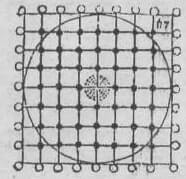
וכתב הרא״ש ז״ל ק״ל אמאי אין נאסרין עוד בכל שורה סביב אלו השבע שורות האמצעיות שבשורה מד׳ רוחות כי עומדין בתוך שש עשרה אמה של גפן האמצעי נמצא אוסר מ״ט גפנים. וי״ל שד׳ רוחות (נ״ל אמות) שבין גפן לגפן היינו בלא עיקר הגפנים נמצא שעם הגפנים יש יותר משש עשרה ע״כ. וכשיהיה נטועה על:
חמשה חמשה. יחקקנו מרובע מל״ב על ל״ב יפול בתוך המרובע שבע שורות אורך על שבע שורות רוחב ויקח אמה משורה שמינית מכאן ואמה משורה תשיעית מכאן. וכן קו העגול שאלכסונה שלשים ושתים יוצא חוץ מן השבע שורות אמה לכל רוח, מפני שהשבע שורות יש ביניהם ששה מרחקים בכל מרחק חמש אמות ואנו צריכין ל״ב ויהיה מרחק בין קו העגולה ובין קו השורה הסמוכה לו חוץ למרובע ארבע אמות וזה צורתו: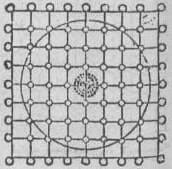
והנה הגפנים הנכנסים בעגולה ל״ז גפנים בלבד והנה כיון שלא נשאר בין אלכסון העגולה ובין השורה הסמוכה לו מבחוץ אלא ארבע אמות והוא שיעור עבודת הכרם, לפי שהשיעור מצומצם ראינו כאילו העגולה נמשכה עד שהגיעה לשורות החיצונות שהיה ביניהם ובין קצה האלכסון ד׳ אמות וניתוסף באלכסונו ד׳ אמות לכל רוח עד שיהיה בעגול אלכסון של ארבעים על ארבעים, דכיון שאנו רואין העגול של שלשים ושתים כאילו מלא ירק בכל מקום [והד׳ אמות היתירות] מגיע לעבודת הכרם הוא, ונמצאו הגפנים כולם שהם בשבע שורות על ז׳ שורות נכנסות בתוך העיגול חוץ מד׳ שבארבע הזויות, והנה עתה בתוך העיגול ארבעים וחמש גפנים, ויהיה צורתה כצורת הראשונה אלא שבמקום ארבע הוא חמש, נמצא עתה מקדש ארבעים אמה בכל רוח. וזהו מה שהצריכו לתנא לומר הרי זה מקדש ארבעים וחמש גפנים כי מאחר שהשורש הקדום הוא שש עשרה אמה לכל רוח היה לו לקצר ולומר הרי זה מקדש שש עשרה אמה לכל רוח וכו׳, ובמה שכתבנו מתורץ, שאי אפשר לו לומר בעל ה׳ ה׳ מקדש ט״ז אמה לכל רוח כיון שהוא מקדש עשרים לכל רוח, ולפיכך אמר מקדש מ״ה גפנים, וזה אי אפשר אלא לאחר שנוסיף בעגולה כמו שבארנו. והטעם שלא אמר בזמן שהן נטועות על חמש חמש מקדש עשרים אמה לכל רוח מפני שעיקר הקידוש הוא שש עשרה אמה לכל רוח וד׳ אמות הוא תוספת הוכרח לקרב האלכסון לשורות מטעם שכתבנו. ואם תאמר כיון שכשהם ד׳ על ד׳ מקדש שש עשרה אמה בלבד למה הפרישו התנא מכלל שש עשרה אמה לכל רוח דבחלוקה דסיפא דנימא היו נטועות על ארבע ארבע או על שש שש וצירף אותו עם כשהן נטועות על חמש חמש. וי״ל דעל ארבע וחמש צורותיהן דומות זו לזו כי יפול בתוך העגול בכל אחת מהן שבע שורות על שבע חוץ מארבע זויות וגם כן הן שוין במנין הגפנים. ויותר טוב הוא להודיענו מנין הגפנים שמקדש, אבל כשהן נטועות על שש שש או על שבע שבע אין מנין הגפנים שמקדש כשיהיה על שש שש כפי מנינם כשיהיה על שבע שבע כמו שנבאר ולפיכך לקח בהן עיקר שכולל הכל ואמר מקדש שש עשרה אמה:
היו נטועות על שש וכו׳ והפרשנו מן הכרם עגולה שאלכסונה שלשים ושתים אמות יוצא קו העגולה מכל שורה החיצונה אמה אחת ומנין הגפנים שבתוך העגולה ארבעה ועשרים וזה צורתו: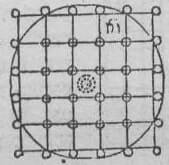
ולא משכנו האלכסון עד שיגיע בד׳ שורות החיצונות שאצל העיגול כמו שעשינו בחמש על חמש, מפני שנשאר בין קצה האלכסון ובין שורה הסמוכה לו חמש אמות, ואפילו נראה כאילו העגולה מלאה ירק ישאר בינה ובין השורות החיצוניות יותר ממה שצריך לעבודת הכרם בתוספת אמה, וע״כ לא הוספנו ברוחב העגולה כלום. ואם יהיה נטוע:
על שבע שבע. ונפריש מן הכרם עגולה שאלכסונה שלשים ושתים אמות, יפלו בתוך העגולה חמש שורות אורך על חמש רוחב חוץ מד׳ זויותיו, ויוצא האלכסון מצלעות המרובע שיש בו חמש על חמש שתי אמות לכל רוח, נשאר בין קצה האלכסון ובין שורה החיצונה הסמוכה לה חמש אמות ומפני זה לא משכנו האלכסון לשורות החיצונות, ומנין הגפנים הנמצאים כ״א וצורתה כמו הצורה הקודמת בשינוי ז׳ במקום ו׳ וכו׳. זהו מה שפירש הרמב״ם ז״ל על משנה זו בקיצור דבריו כל האפשרי. ולפי שראיתי אחד מהחכמים הקדמונים שכתב על זה הפירוש הן הן הדברים שנאמרו למשה וג״כ הרא״ש ז״ל הסכים לזה הפירוש ודחה פי׳ ה״ר שמשון ז״ל לא הוזקקתי לכתוב פירוש ה״ר שמשון ז״ל על משנה זו:
Mishnah Yomi FAQ
What is Mishnah Yomi?
Mishnah Yomi is a daily study program where participants study two mishnayot (individual teachings from the Mishnah) every day. By following this program, one can complete the entire Mishnah in about six years.
What is the Mishnah?
The Mishnah is the first major written collection of Jewish oral traditions, forming the basis of the Talmud. It dates back to around 200 CE and consists of teachings and discussions of Jewish law by various rabbis.
Who started the Mishnah Yomi program?
In 1934, the Kozoglover Gaon, Rav Aryeh Tzvi Frommer, who took over from Rav Meir Shapiro (the founder of Daf Yomi) as the head of Yeshivas Chachmei Lublin, initiated the Mishnah Yomi cycle, focusing on Seder Zeraim and Seder Taharos. After World War II, in 1947, Rav Yonah Sztencl, a disciple of Rav Frommer, expanded the program, advocating for a comprehensive study of Shishah Sidrei Mishnah. The idea of studying two Mishnayos daily gained the support of figures like Rav Isser Zalman Meltzer, the Tchebiner Rov, and the Gerer Rebbe, marking the formal inception of Mishnah Yomi.
How long does it take to complete the Mishnah with Mishnah Yomi?
Following the Mishnah Yomi program, one can complete the Mishnah in approximately six years.
Can anyone join Mishnah Yomi?
Yes, anyone interested in studying the Mishnah can start the Mishnah Yomi cycle. There’s no need for prior knowledge; beginners are welcome.
Do I need to know Hebrew to study Mishnah Yomi?
While the Mishnah is originally in Hebrew, there are numerous translations and commentaries available in various languages, making it accessible to anyone interested in studying.
Is there a specific time of day to study Mishnah Yomi?
There’s no designated time. Participants can choose a time that best fits their schedule.
Can I study Mishnah Yomi with a group?
Yes, many communities and synagogues organize group study sessions for Mishnah Yomi. Studying in a group can enhance understanding and foster camaraderie.
What if I miss a day?
If you miss a day, you can catch up by studying the missed mishnayot alongside the current day’s study or by dedicating some extra time until you’re back on track.
Bartenura
נקע – valleys that are in the fields like kinds of indentations/cavities.
נותנים לה עבודתה – six handbreadths for this is the tilling of an individual vine.
וזורע את המותר – but we don’t say that it appears like Kilayim/mixed seeds since the vine and the seeds are within the wine-press or within the cavity.
אם אין שם ד' אמות אסור – like the law of untilled ground surrounding the vineyard (between the vines and the fence) of the chapter above (see Tractate Kilayim, Chapter 4, Mishnah 1), that gives four cubits for the tilling of the vineyard. But the Halakha is not according to Rabbi Yossi.
והבית שבכרם – that surrounds the house there are vines.
זורעים בתוכו – and we don’t say that since the vines surround it from the four directions, the partitions are not effective.
נקע. בקעים שבשדות כעין גומות:
נותנים לה עבודתה. ששה טפחים שזו היא עבודת גפן יחידית:
וזורע את המותר. ולא אמרינן דמיחזי ככלאים כיון שהגפן והזרעים בתוך הגת או בתוך הנקע:
אם אין שם ד״א אסור. כדין מחול הכרם דפרקין דלעיל דנותן ארבע אמות לעבודת הכרם. ואין הלכה כר׳ יוסי:
והבית שבכרם. שסביבות הבית יש גפנים:
זורעים בתוכו. ולא אמרינן הואיל והגפנים מקיפים אותו מארבע רוחותיו אין המחיצות מועילות: